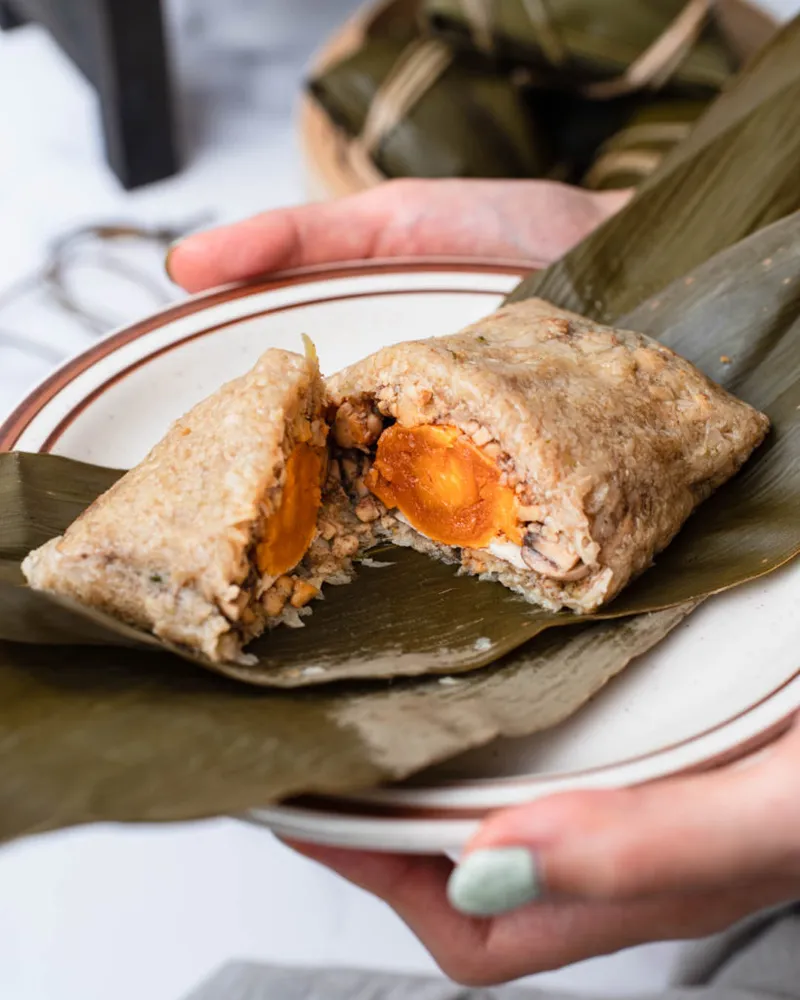
Vegetarian Keto Rice Dumplings with Cauliflower Rice and Tempeh
Low-carb vegetarian rice dumplings made with sticky cauliflower rice, stir-fried tempeh, mushrooms, and salted duck egg yolks. A keto-friendly twist on the classic Dragon Boat Festival treat!
Equipment
- • Wok or pot
- • Bamboo steamer (optional)
Ingredients
Leaf Preparation
- 40 pieces dried or fresh reed leaves
- 1 tablespoon olive oil
- 10-15 dried salt water grass (as twine)
Filling -- Dried Shiitake Mushrooms
- 50 grams dried shiitake mushrooms (soaked for at least 6 hours)
- 1 tablespoon olive oil
- 1 tablespoon keto soy sauce
- 1 teaspoon minced garlic
- ½ tablespoon monk fruit sweetener
Filling -- Mushrooms & Tempeh
- 500 grams mushrooms (sliced)
- 1 tablespoon olive oil
- 3 grams sea salt
- 1 ¼ teaspoon five spice powder
- 300 grams tempeh
- 1 tablespoon olive oil
- 1 teaspoon minced garlic
- ½ tablespoon olive oil
- 2 ⅓ tablespoons keto soy sauce
- ⅔ tablespoon sake
- 1 tablespoon five spice powder
- 1 teaspoon monk fruit sweetener
Filling -- Salted Duck Egg Yolks
- 10 salted duck egg yolks
- 1 tablespoon sake or rose wine
Sticky Cauliflower Rice
- 3 ½ tablespoons minced shallots
- 3 ½ tablespoons minced garlic
- 1.8 kilograms riced cauliflower (about 3 ½ heads)
- 3 tablespoons olive oil
- 14 grams sea salt
- 2-3 grams white pepper
- 45 grams psyllium husk powder
Instructions
Leaf Preparation
- 1
If using dried reed leaves, soak them overnight. Skip this step if using fresh leaves.
- 2
Rinse and gently rub the leaves to clean them. Place them in a deep pot and add enough water to cover.
- 3
Add a tablespoon of olive oil to the water. This makes the leaves more flexible and less likely to crack.
- 4
Cover the pot and bring to a boil over high heat, then turn off the heat immediately. Keep the lid on and let the leaves soak overnight, or until the water is cool enough to touch if you are short on time.
Filling -- Dried Shiitake Mushrooms
- 1
Soak the dried shiitake mushrooms for at least 6 hours until soft and plump.
- 2
Trim and discard the stems. In a heatproof bowl, stir together the olive oil, keto soy sauce, minced garlic, and monk fruit sweetener. Add the mushrooms and massage them with the sauce.
- 3
Steam the shiitake mushrooms for 30 minutes.
- 4
Cut them in half and set aside.
Filling -- Salted Duck Egg Yolks
- 1
Separate the salted duck egg whites and yolks. Reserve the whites for other dishes.
- 2
Place the egg yolks on a plate or in a medium bowl. Drizzle sake or rose wine over them and steam for about 20 minutes.
Filling -- Mushrooms & Tempeh
- 1
Break the tempeh into small pieces by hand. In a small bowl, stir together the remaining tempeh seasoning ingredients (except the tablespoon of olive oil).
- 2
Heat a tablespoon of olive oil in a frying pan over medium heat. Sauté the mushroom slices until golden brown and soft, then season with sea salt and five spice powder. Stir to combine, taste, and adjust seasoning as needed. Transfer the mushrooms to a plate and set aside.
- 3
In the same pan, heat another tablespoon of olive oil. Stir-fry the tempeh pieces until golden brown, then pour in the bowl of sauce and fry until the tempeh is evenly coated. Transfer to a plate and set aside.
Sticky Cauliflower Rice
- 1
Cut the cauliflower into small florets. Chop the stems and leaves into smaller pieces, or discard them if you prefer.
- 2
Rinse under running water. Drain and pat as dry as possible with a clean towel.
- 3
Pulse the cauliflower in a food processor or blender until rice-sized. Work in batches if needed and avoid over-blending, or it will turn mushy. Transfer the cauliflower rice to a large container and set aside.
- 4
Process the garlic cloves and shallots to the size of rice grains or smaller.
- 5
Divide the garlic, shallots, cauliflower rice, and psyllium husk powder into three equal batches.
- 6
Heat a tablespoon of olive oil in a large frying pan (about 12 inches) over medium-high heat. Sauté one batch of garlic and shallots until fragrant, then increase to high heat and add one batch of cauliflower rice. Stir-fry until it turns pale yellow, about 3 minutes.
- 7
Season with sea salt and white pepper. Taste and adjust as needed. Sprinkle one batch of psyllium husk powder evenly over the rice and stir-fry until combined. The rice will become sticky enough to form a dough ball.
- 8
Repeat with the remaining two batches.
Assembling
- 1
The leaves should be fully soaked by now. For 10 dumplings, remove 40 leaves and pat them roughly dry. Trim the stems with scissors to make wrapping easier. Soak the twines in water to prevent them from snapping.
- 2
Use four leaves per dumpling. Start with two leaves, placing one on top of the other in a cross shape, smooth side up. Fold the overlapping section into a cone (see photo reference above) and hold the tip with your hand.
- 3
Fill the bottom of the cone with sticky cauliflower rice (about 60 grams). This will become the top of your dumpling, so spread the rice to fully cover the surface; otherwise, the filling may fall apart and the dumpling will lose its shape. Layer in tempeh (about 15 grams), an egg yolk, mushrooms, and shiitake mushrooms. Top with more tempeh (about 15 grams) and sticky cauliflower rice (60 grams).
- 4
One at a time, place the remaining two leaves on the left and right sides of the cone. Hold the cone shape carefully. Use your thumbs to close the dumpling with an inward fold. Press firmly, then fold the upper bunch of leaves down and the lower bunch up to seal the dumpling completely.
- 5
Tie the dumpling securely with a twine (see pictures above). Trim any excess leaves. Repeat until all the ingredients are used.
Cooking
- 1
Bring plenty of water to a boil in a wok or pot, then place a steamer rack inside. The water level should sit below the rack.
- 2
Arrange the dumplings in a bamboo steamer or on a plate and set them on the rack. If using a bamboo steamer, place its lid on top. Cover the wok or pot with a lid and steam for 15 minutes over medium heat.
- 3
Remove the dumplings immediately. Gently unfold the leaves and serve hot.