
HK x Viet-style Rice Paper Spring Rolls
February 23, 2021 · Updated April 5, 2021
Jump to Recipe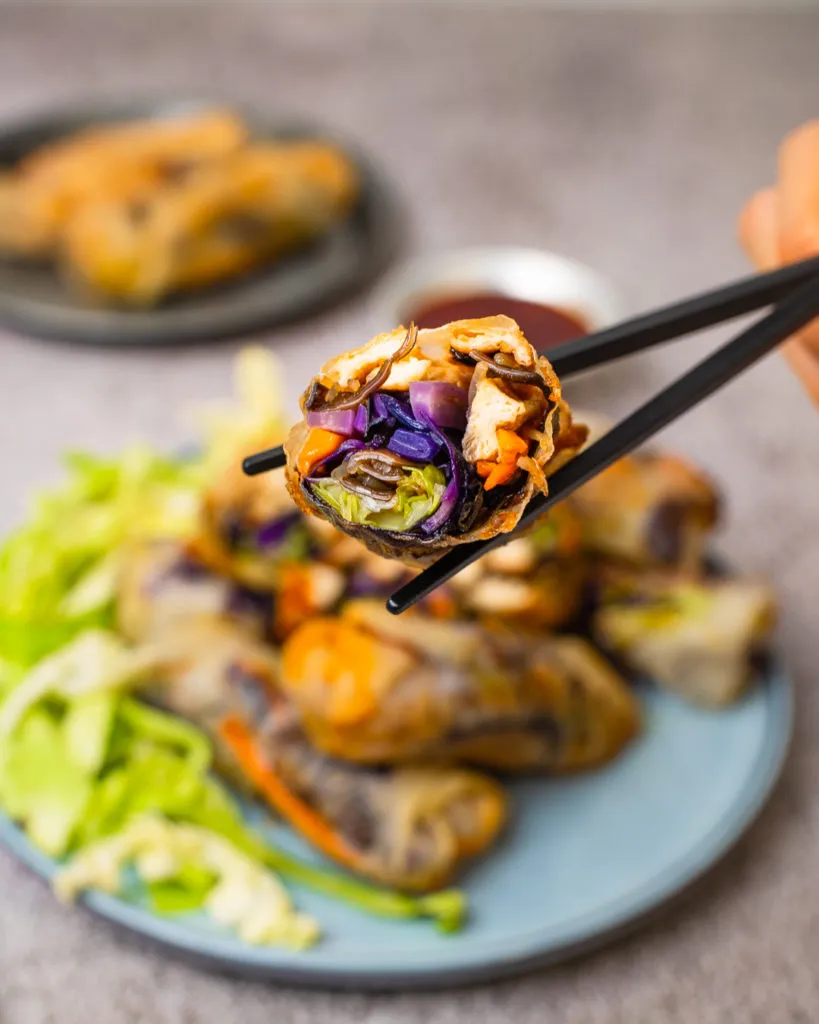
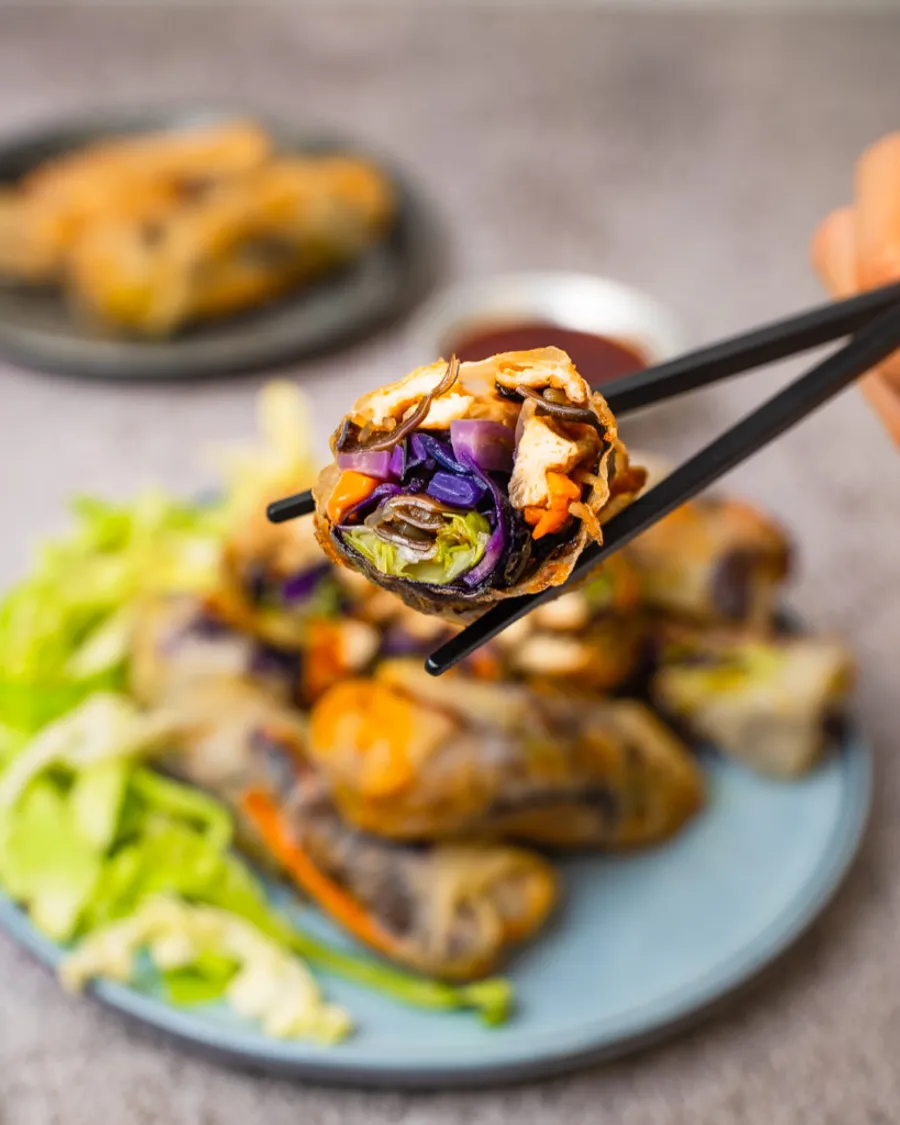
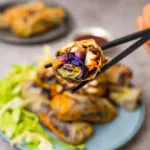
Use Vietnamese rice paper to make Cantonese style spring rolls gluten-free and fill them with veggies! Yes, I’m talking about those crispy and crunchy fried spring rolls. Can you hear the crackling sound?
These homemade spring rolls are great appetizers for any kind of gathering. Feel free to make them as your weekend treats too!
I love spring rolls as much as I love potstickers or dumplings. When I got the right recipe for gluten-free dumpling wrappers, I was already thinking of a way to adapt it to a spring roll wrapper recipe, but that’d be much more difficult than the former one. Wrappers for spring rolls must be thin enough but shouldn’t be easy to break, as we don’t want oil getting into the filling during deep-frying. Turned out, one day, while I was making gỏi cuốn, rice paper summer rolls for my lunch, an idea flashed into my mind - why don’t I use rice paper?
Rice paper is gluten-free, thin and FLEXIBLE! Such an ideal wrapper for spring rolls!
SPRING ROLLS AROUND THE WORLD
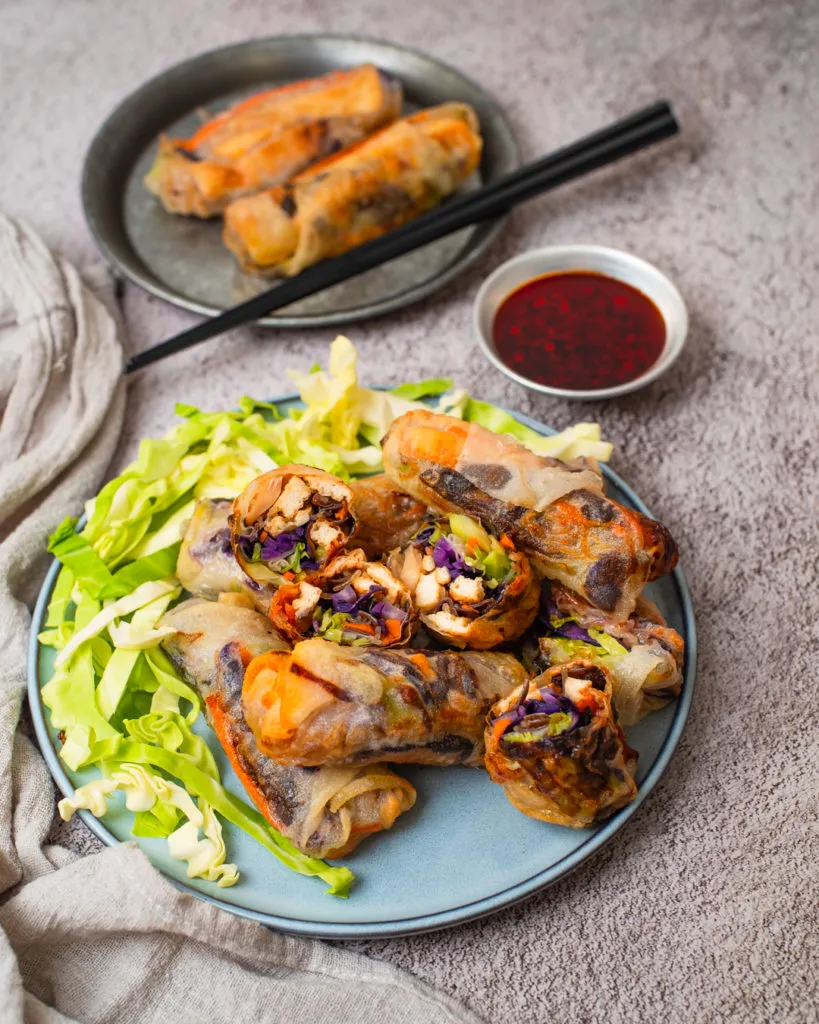
There are many more types of spring rolls over the world than you’ve imagined - Cheun Gyun in Hong Kong, Popiah in Taiwan/Malaysia/Singapore, Chả Giò in Vietnam, Gimmari in Korea, Lumpia in Indonesia/the Philippines, Chūn Juǎn in Shanghai, etc. I can’t name them all, though I want to have all of them!
The type I made is Hong Kong-style mixed with Vietnamese style. As I’ve mentioned, Vietnamese rice paper is used instead of spring roll wrappers made with all-purpose flour for a gluten-free version, but the fillings are still more Hong Kong-style, including pan-fried tofu, sautéed veggies, shiitake mushrooms, rice vermicelli and so on. In Hong Kong, people serve spring rolls with a wide variety of dipping sauces, but the most typical one is still Worcestershire sauce, so a homemade sauce resembling the taste of Worcestershire sauce will be included in this recipe.
MEMORIES OF HONG KONG KIDS
Parents used to go to dim sum houses with my grandma during the weekend when we were children. No kid was allowed to run around as there were ladies pushing dim-sum carts walking around the crowded restaurant. The happiest thing was that we were given some money to buy a magazine to read quietly while the adults were chattering about this and that.
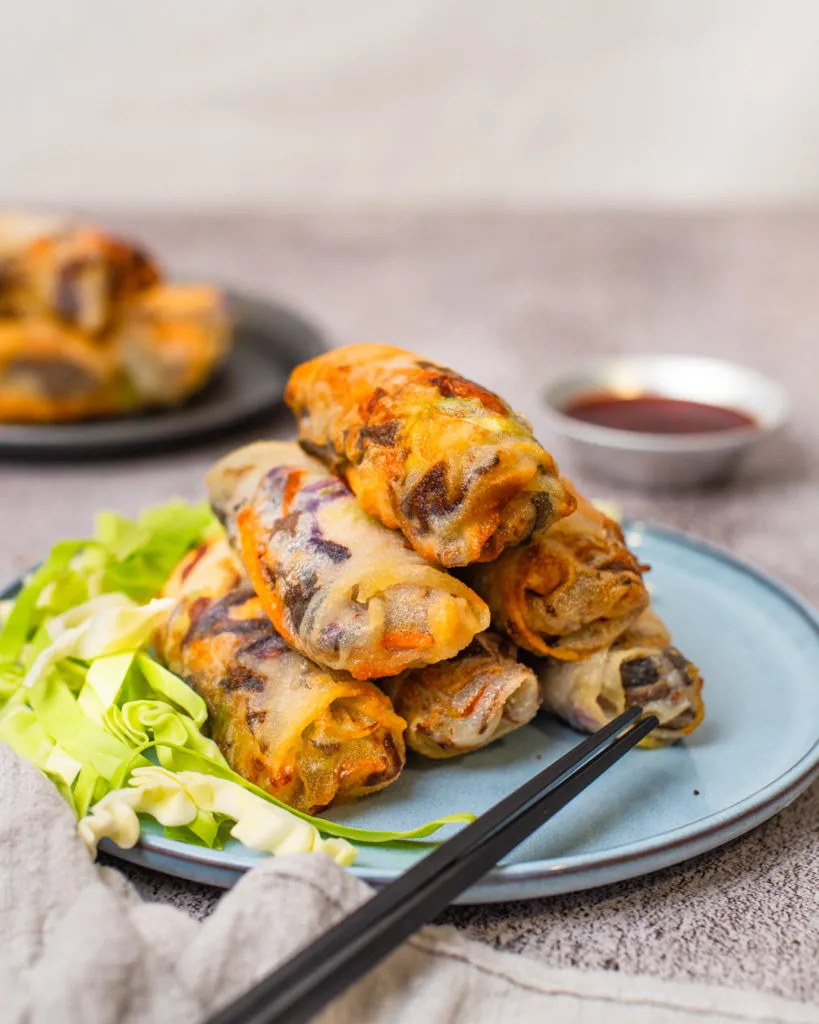
We were not that keen on eating dim sum. We didn’t look away from our magazine unless our parents asked us to eat something. Spring rolls were one of the few dim sum that could take our glaze away from what we were reading. Picked up a dish from the cart, cut the rolls into half, drizzled the rolls with sauce, chopped a stamp on the ‘dim-sum card’ (bill card) - we watched the lady doing these skillfully, while holding our chopsticks. We love the crispy wrappers, the crunchy fillings and the crackling sound. I guess many Hong Kong kids still remember all these, right?
HONG KONG-STYLE VS. VIETNAMESE STYLE
The major difference will definitely be the wrappers. For Hong kong-style, the wrappers are pieces of thin and rectangular pastry made with all-purpose flour. And as most of us know, rice paper made with white rice flour (or some may add tapioca flour) is used for Vietnamese-style. While we’re using rice paper for a gluten-free substitution, we won’t include this point below.
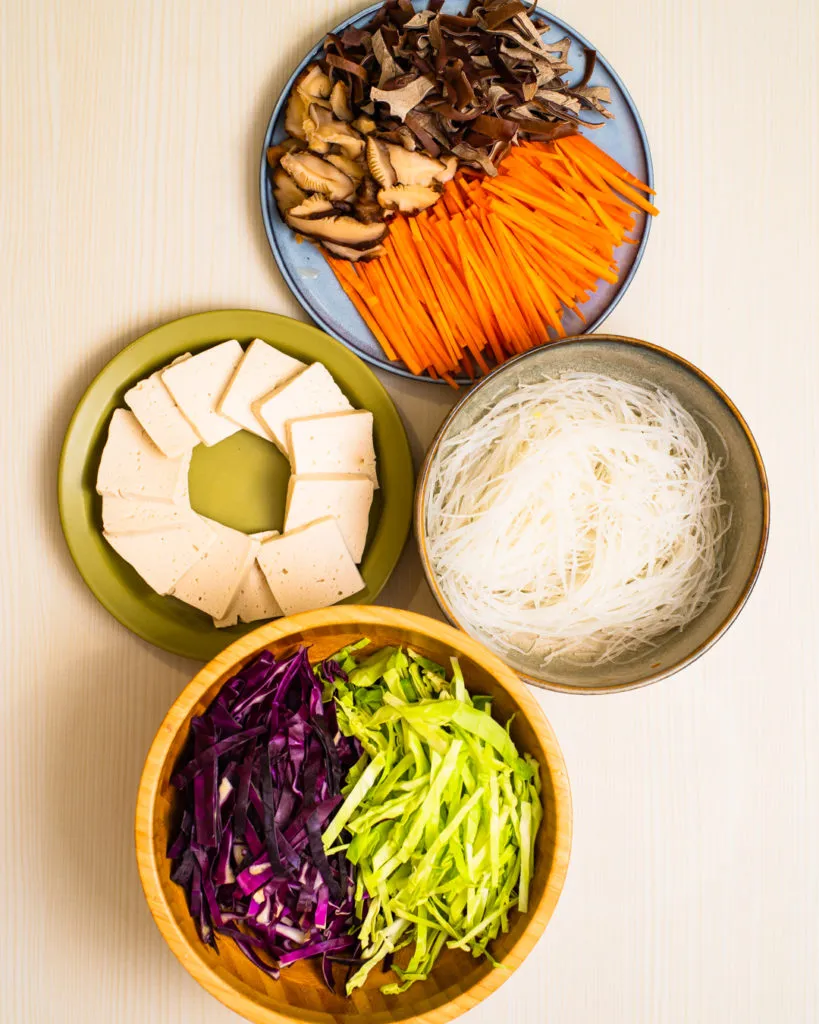
1. FILLING FOR THE SPRING ROLLS
As we can tell from the name, spring rolls - cheun gyun for Hong Kong-style and chả giò for Vietnamese style, are filled with fresh and seasonal spring vegetables - carrots, cabbages and other veggies.
Wood ear mushrooms are often seen in both types, while for Hong Kong-style, another kind of fungus - shiitake mushrooms, which can always find their role in Cantonese dishes, are also filled in the rolls. There are more veggie fillings such as bean sprouts and bamboo shoots that can be found in cheun gyun.
Here comes the major difference - herb is the key for chả giò. Like Vietnamese rice paper rolls, the summer roll gỏi cuốn, fresh herbs namely Vietnamese basil, coriander, mints are added to chả giò to enrich the flavors and freshness. Meanwhile, the only herb in cheun gyun is chive sprouts, but it’s not a key ingredient and may sometimes be omitted.
Fillings for cheun gyun are cooked before frying whereas stuffings for chả giò are raw. Both styles are originally non-vegan and pork is typically part of the filling. For cheun gyun, we slice the pork to cook with other veggies before wrapping; for chả giò, pork is grounded and combined with other raw ingredients in a large bowl for wrapping.
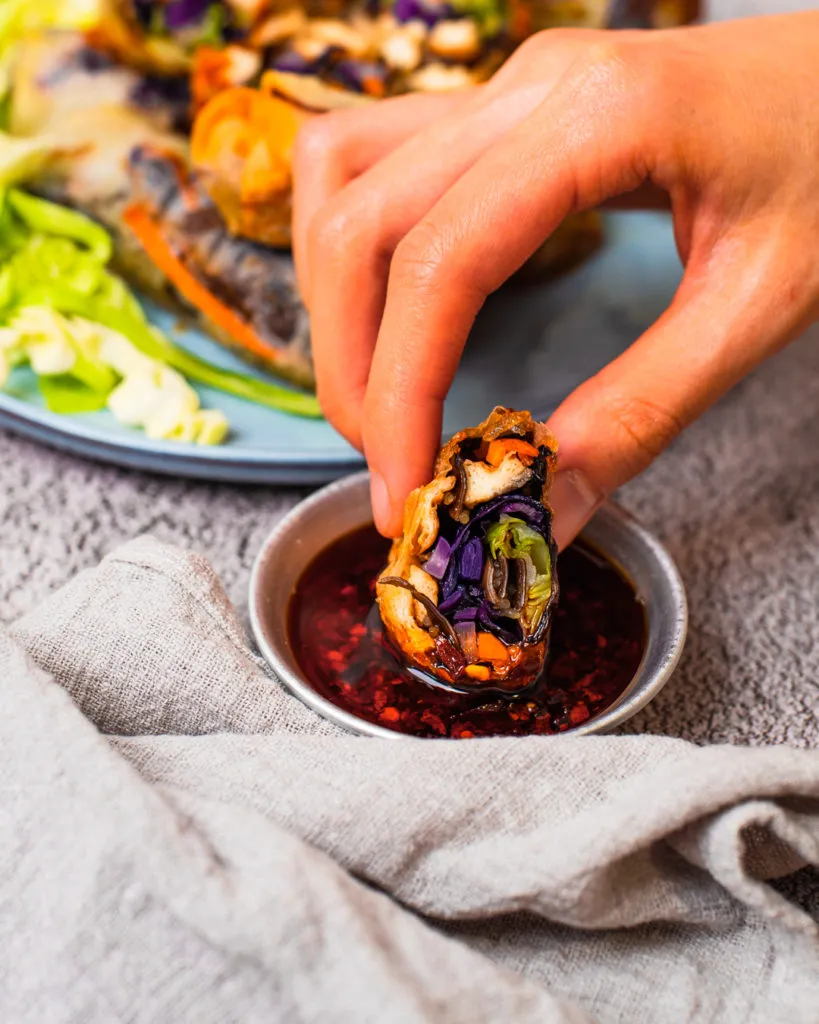
2. DIPPING SAUCE FOR THE SPRING ROLLS
‘Do you need Worcestershire sauce (gip zap)?’ When we order cheun gyun in dim sum houses, the dim sum lady would ask this question and the answer is always ‘Yes, please!’ Worcestershire sauce is a sour savory sauce with subtle sweetness and spiciness. A great sauce to cut through the richness of deep-fried goodies. Sadly we’re not using Worcestershire sauce for this recipe as neither is it gluten-free nor vegan, but no worries, a simple homemade sauce imitating the taste will be created here.
Just like other deep-fried goodies, people have their own preference when it comes to dipping sauce for cheun gyun. Some people love serving with plain soy sauce, chilli oil, vinegar, plum sauce, or even mayonnaise.
People serve chả giò with different sauces in different parts of Vietnam. I’m not going to explain deeply about them but there are mainly 3 sauces - nước chắm (typical sauce made with fish sauce, lime juice and chilli), nước lèo (peanut sauce), tương xào (tastes like hoisin sauce). Emphasizing the freshness, I know people in Vietnam love wrapping the chả giò with a piece of fresh lettuce before dipping it into the flavorful sauce.
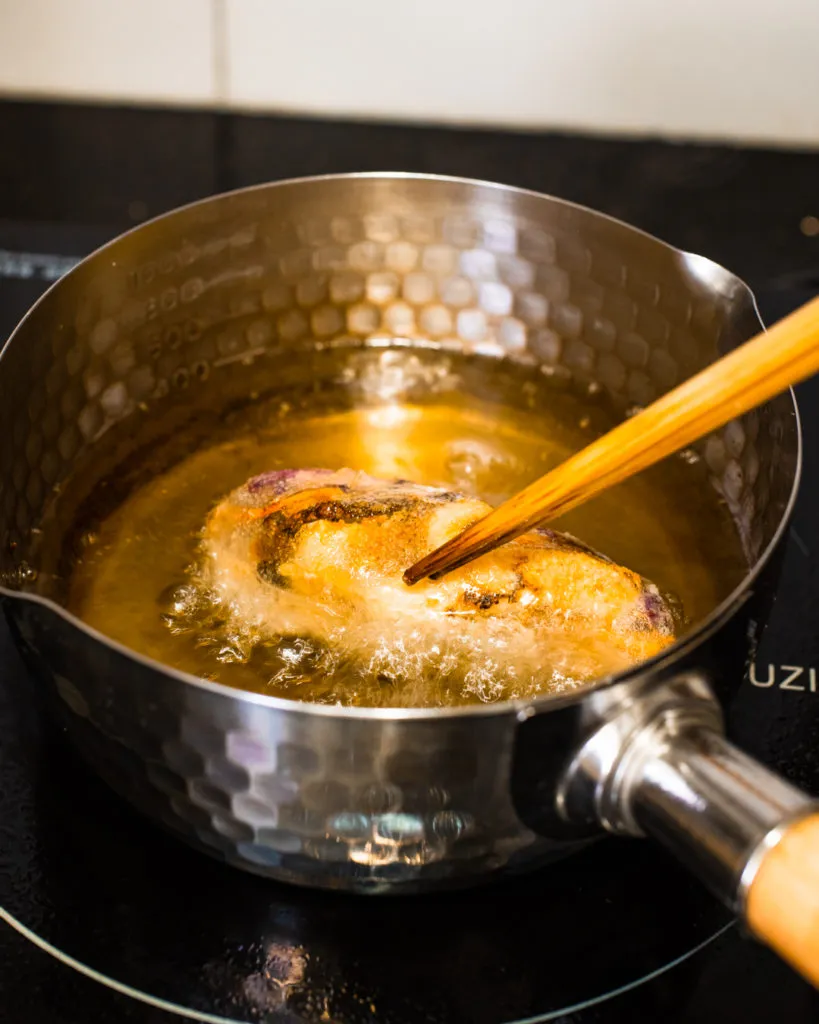
HOW TO FRY THE SPRING ROLLS
Choose oil that is suitable for deep-frying, which has a higher smoke point than the desired cooking temperature, such as peanut oil, sunflower seed oil or refined coconut oil.
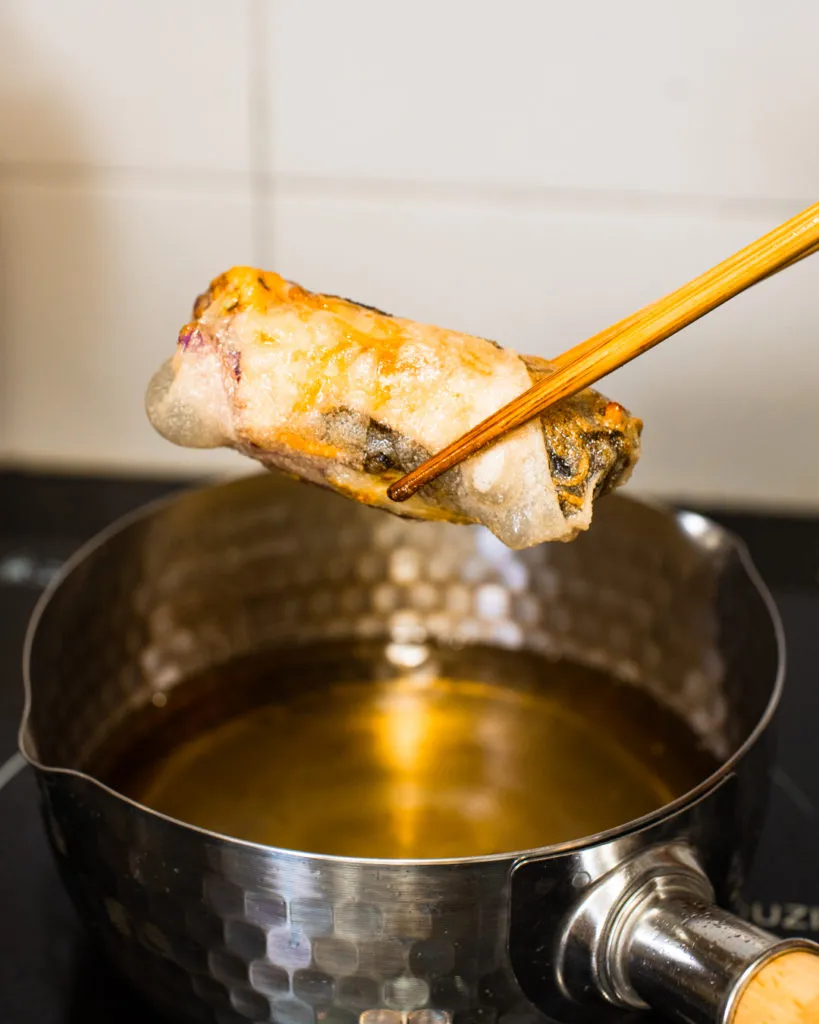
Make sure you have sealed the spring rolls tightly so that the oil will not get into the rolls when deep-frying. That would ruin the rolls!
When deep-frying, fill a small pot with oil deep enough to cover the spring rolls. Heat the oil over medium heat until it reaches 320°F (160°C). Try to maintain the oil temperature at 320°F but not getting too high in the whole process. High temperature will make ‘big bubbles’ on the surface of the rolls.
STORAGE
You can keep the uncooked spring rolls in an airtight container in the freezer overnight and fry them on the next day.
If you can’t finish the fried spring rolls (how can that be possible?), store them in an airtight container in the refrigerator for up to 24 hours. Fried them again when you want or baked them in a preheated oven at 350°F (180°C) for 10 minutes.
MORE ASIAN-STYLE/HONG KONG-STYLE RECIPES
TRIED MY RECIPES ALREADY? Tag me on Instagram and hit the FOLLOW button for all of the latest updates!
HK x Viet-style Rice Paper Spring Rolls
Use Vietnamese rice paper to make Cantonese style spring rolls gluten-free and fill them with veggies! Yes, I’m talking about those crispy and crunchy fried spring rolls. Can you hear the crackling sound?
-
Small pot for frying
For Spring Rolls -
12 pieces 6-inch round rice paper
-
150 grams extra firm tofu (drained & cut into strips)
-
110 grams carrots/bamboo shoots (shredded - 1 cup)
-
21 grams dried wood ear mushrooms (soaked & sliced - 3/4 cup)
-
140 grams cabbage (shredded - 2 cups)
-
140 grams purple cabbage (shredded - 2 cups)
-
1/4 teaspoon sea salt
-
125 grams fresh shiitake mushrooms (sliced - 1 cup)
-
1 bunch glass noodles (soaked & cut into portions)
-
120 milliliter water (1/2 cup)
-
2 tablespoons tamari
-
1/2 teaspoon ground white pepper
-
1/4 teaspoon five spices powder
-
1 teaspoon cornstarch
-
1 tablespoon water
-
1 teaspoon sesame oil
-
cooking oil (for cooking & deep-frying)
For Dipping Sauce
-
1 tablespoon tamari
-
2 tablespoons rice vinegar
-
1 clove garlic (sliced)
-
2 pieces thumb-sized ginger
For Filling
In a bowl soak dried wood ear mushrooms for 30 minutes until soft. Slice it afterwards. In another bowl soak rice vermicelli glass noodles for 15 minutes until soft. Cut them shorter into several portions.
3015
In a frying pan heat 1/2 tablespoon oil over medium heat, pan-fry tofu until all sides are golden brown. Transfer them into a bowl and set aside. In the same pan add another 1/2 tablespoon oil, add carrots, wood ear mushrooms, cabbage and purple cabbage to fry until a bit brown and start to soften, then season them with sea salt. Transfer them into a bowl and set aside. Heat 1 more teaspoon oil and add shiitake mushrooms to sauté until fragrant, then add rice vermicelli/glass noodles and pour 1/2 cup water into the pan. Simmer for about a minute until the noodles have absorbed the water and become soft but still chewy.
1/21/2/1120
Add tofu, carrots, black fungus, cabbage and purple cabbage back to the pan to roughly stir-fry them. Stir in tamari, season with ground white pepper and five spices powder. Taste and adjust the flavors if necessary. In a small bowl mix cornstarch and 1 tablespoon water together, then stir in for thickening and turn off the heat. Finally stir in sesame oil.
/1
Assembling the Rolls
Prepare a dish/pan that can fit your rice paper and pour warm water into it. Dip each rice paper into warm water when you use it for about 15 to 20 seconds or time suggested on the packaging. The rice paper should become a bit soft but still elastic, then remove it from water and place it onto a non-stick working surface.
/1520
Place filling onto about 1 inch to 1.5 inch from the bottom of the rice paper. Fold the left and right edges of the paper in, then gently pull up the bottom of the paper to cover the filling. Use your finger to press the filling firmly and roll up to cover the filling. Keep rolling until the roll seals itself.
11.5
Frying the Rolls
Prepare oil in a deep pot and fill it no more than half full, deep enough to cover the rice spring rolls. Heat the oil over medium-low heat until it reaches around 320°F (160°C). Make sure your rice spring rolls are dry to prevent violent oil splattering. Put 2 to 3 rolls into the oil at one time and be careful of sticking together. Fry for about 30 seconds until the down side of the rolls turns golden brown, then flip to another side to fry for around 20 seconds more, until golden brown. Drain the rolls on paper towels to absorb excess oil. You may also choose to pan-fry the rolls. Just heat a tablespoon oil in a pan and pan-fry them until golden brown.
160°C (320°F)! 3020
For Dipping Sauce
In a saucepan add all dipping sauce ingredients. Heat over low heat and bring to a boil.
Appetizer, Side Dish, SnackAsian, Cantonese, Chinese, Hong Kong, VietnameseAppetizer, Gluten-free, Savory, Snack, Vegan, ,HK x Viet-style Rice Paper Spring Rolls
Use Vietnamese rice paper to make Cantonese style spring rolls gluten-free and fill them with veggies! Yes, I’m talking about those crispy and crunchy fried spring rolls. Can you hear the crackling sound?
Servings
1
Cuisine
Asian, Cantonese, Chinese, Hong Kong, Vietnamese
Equipment
- • Small pot for frying
Ingredients
Instructions
- 1
In a bowl soak dried wood ear mushrooms for 30 minutes until soft. Slice it afterwards. In another bowl soak rice vermicelli glass noodles for 15 minutes until soft. Cut them shorter into several portions.
- 2
In a frying pan heat 1/2 tablespoon oil over medium heat, pan-fry tofu until all sides are golden brown. Transfer them into a bowl and set aside. In the same pan add another 1/2 tablespoon oil, add carrots, wood ear mushrooms, cabbage and purple cabbage to fry until a bit brown and start to soften, then season them with sea salt. Transfer them into a bowl and set aside. Heat 1 more teaspoon oil and add shiitake mushrooms to sauté until fragrant, then add rice vermicelli/glass noodles and pour 1/2 cup water into the pan. Simmer for about a minute until the noodles have absorbed the water and become soft but still chewy.
- 3
Add tofu, carrots, black fungus, cabbage and purple cabbage back to the pan to roughly stir-fry them. Stir in tamari, season with ground white pepper and five spices powder. Taste and adjust the flavors if necessary. In a small bowl mix cornstarch and 1 tablespoon water together, then stir in for thickening and turn off the heat. Finally stir in sesame oil.
- 4
Prepare a dish/pan that can fit your rice paper and pour warm water into it. Dip each rice paper into warm water when you use it for about 15 to 20 seconds or time suggested on the packaging. The rice paper should become a bit soft but still elastic, then remove it from water and place it onto a non-stick working surface.
- 5
Place filling onto about 1 inch to 1.5 inch from the bottom of the rice paper. Fold the left and right edges of the paper in, then gently pull up the bottom of the paper to cover the filling. Use your finger to press the filling firmly and roll up to cover the filling. Keep rolling until the roll seals itself.
- 6
Prepare oil in a deep pot and fill it no more than half full, deep enough to cover the rice spring rolls. Heat the oil over medium-low heat until it reaches around 320°F (160°C). Make sure your rice spring rolls are dry to prevent violent oil splattering. Put 2 to 3 rolls into the oil at one time and be careful of sticking together. Fry for about 30 seconds until the down side of the rolls turns golden brown, then flip to another side to fry for around 20 seconds more, until golden brown. Drain the rolls on paper towels to absorb excess oil. You may also choose to pan-fry the rolls. Just heat a tablespoon oil in a pan and pan-fry them until golden brown.
- 7
In a saucepan add all dipping sauce ingredients. Heat over low heat and bring to a boil.