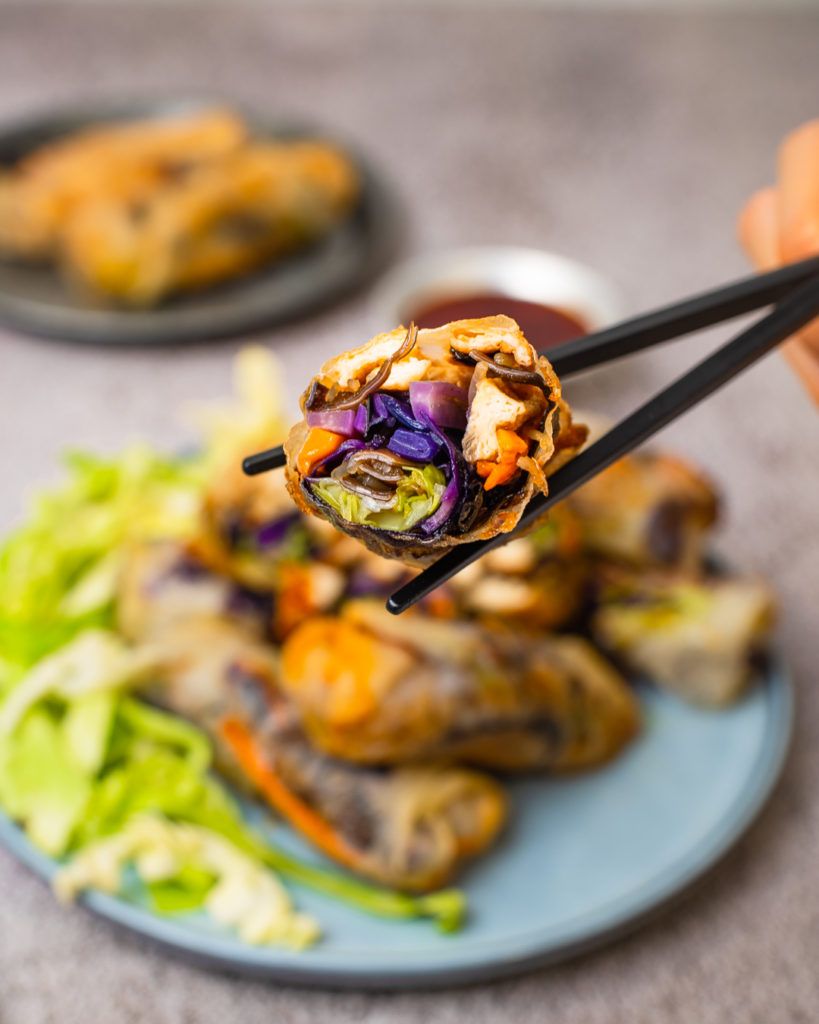
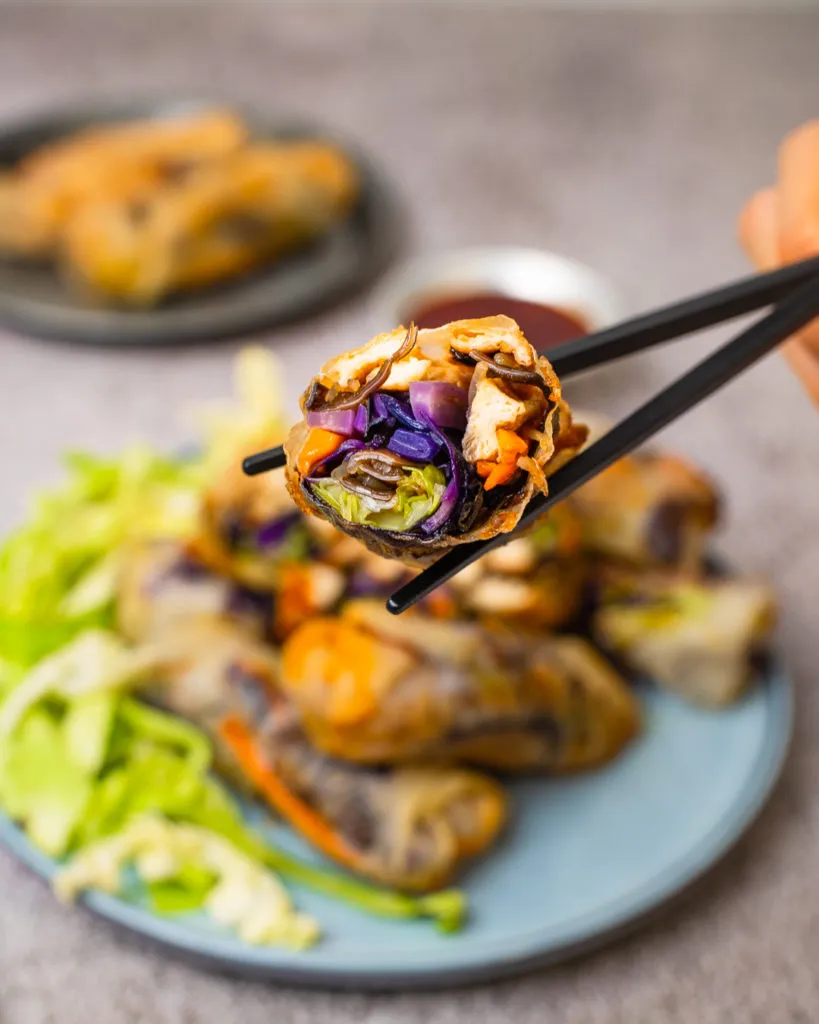
Use Vietnamese rice paper to make crispy, gluten-free Cantonese-style spring rolls filled with veggies! Yes, I’m talking about those golden, crunchy deep-fried spring rolls. Can you hear the crackling sound?
These homemade spring rolls are great appetizers for any gathering, or make them as a weekend treat!
I love spring rolls as much as I love potstickers and dumplings. When I got the right recipe for gluten-free dumpling wrappers, I was already thinking about adapting it for spring roll wrappers — but that would be much more difficult. Spring roll wrappers must be thin enough yet strong enough not to break, since we don’t want oil getting into the filling during deep-frying. Then one day, while making gỏi cuốn (rice paper summer rolls) for lunch, an idea hit me — why not just use rice paper?
Rice paper is gluten-free, thin, and FLEXIBLE! An ideal wrapper for spring rolls!
SPRING ROLLS AROUND THE WORLD
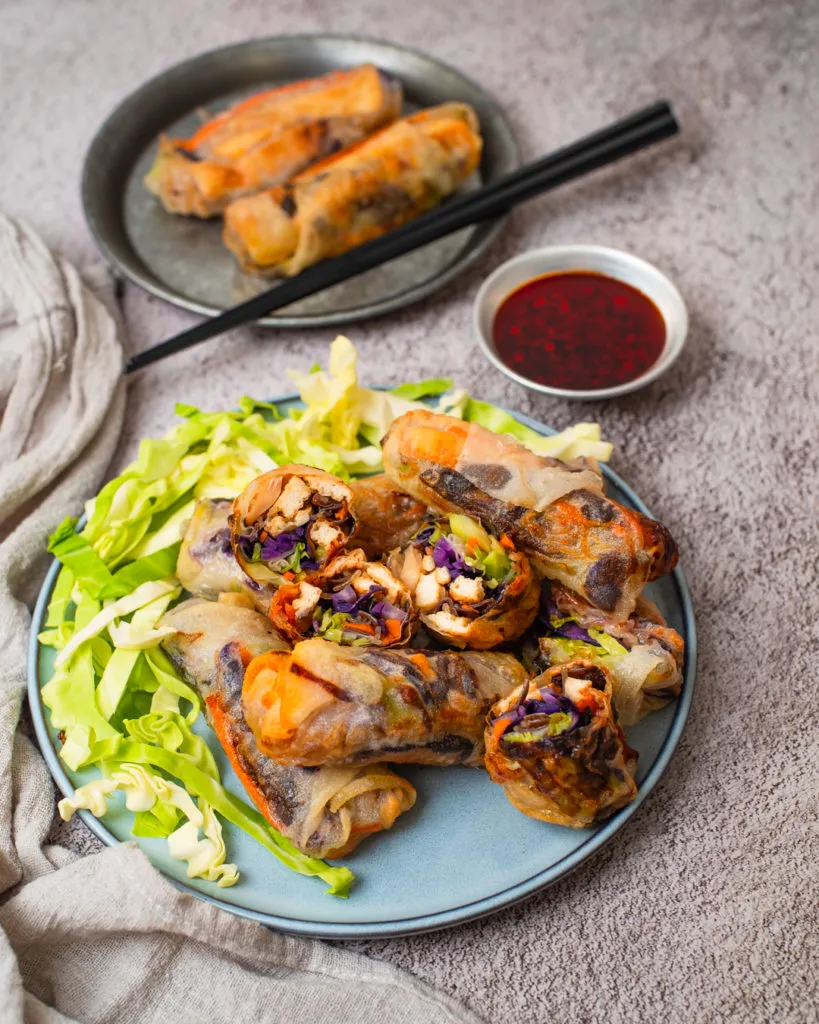
There are many more types of spring rolls around the world than you might think — Cheun Gyun in Hong Kong, Popiah in Taiwan/Malaysia/Singapore, Chả Giò in Vietnam, Gimmari in Korea, Lumpia in Indonesia/the Philippines, Chūn Juǎn in Shanghai, and more. I can’t name them all, though I wish I could try every one!
The type I made is a Hong Kong–Vietnamese hybrid. Vietnamese rice paper replaces the traditional all-purpose flour wrappers for a gluten-free version, but the fillings are Hong Kong-style — pan-fried tofu, sautéed veggies, shiitake mushrooms, rice vermicelli, and more. In Hong Kong, spring rolls are served with a wide variety of dipping sauces, but the most classic is Worcestershire sauce. A homemade sauce that captures that flavor is included in this recipe.
MEMORIES OF HONG KONG KIDS
My parents used to take us to dim sum houses with my grandma on weekends when we were children. No kid was allowed to run around — there were ladies pushing dim sum carts through the crowded restaurant. The happiest part was being given some money to buy a magazine to read quietly while the adults chatted.
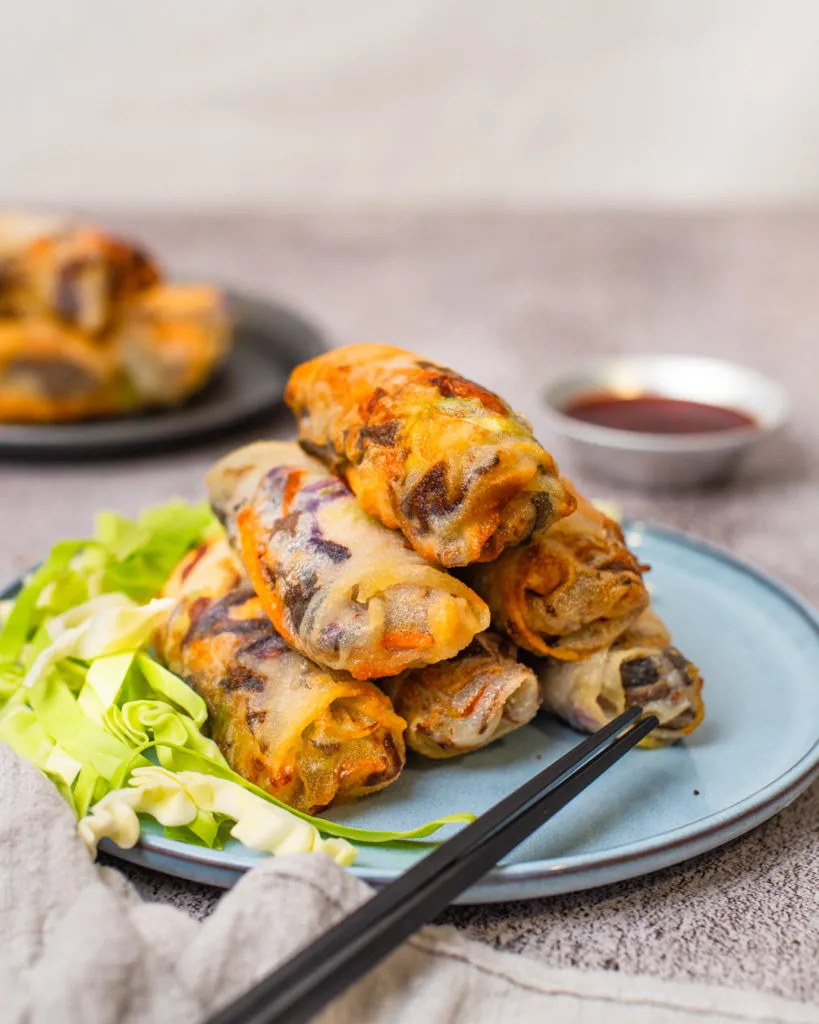
We weren’t that keen on eating dim sum. We didn’t look away from our magazines unless our parents told us to eat something. Spring rolls were one of the few dishes that could tear our gaze away from what we were reading. Pick up a dish from the cart, cut the rolls in half, drizzle with sauce, stamp the dim sum card — we watched the lady do it all skillfully while holding our chopsticks. We loved the crispy wrappers, the crunchy fillings, and that crackling sound. I’m sure many Hong Kong kids still remember all this, right?
HONG KONG-STYLE VS. VIETNAMESE STYLE
The biggest difference is the wrappers. Hong Kong-style uses thin, rectangular pastry sheets made with all-purpose flour. Vietnamese-style uses rice paper made with white rice flour (sometimes with tapioca flour). Since we’re using rice paper as a gluten-free substitute, we’ll skip that difference below.
1. FILLING
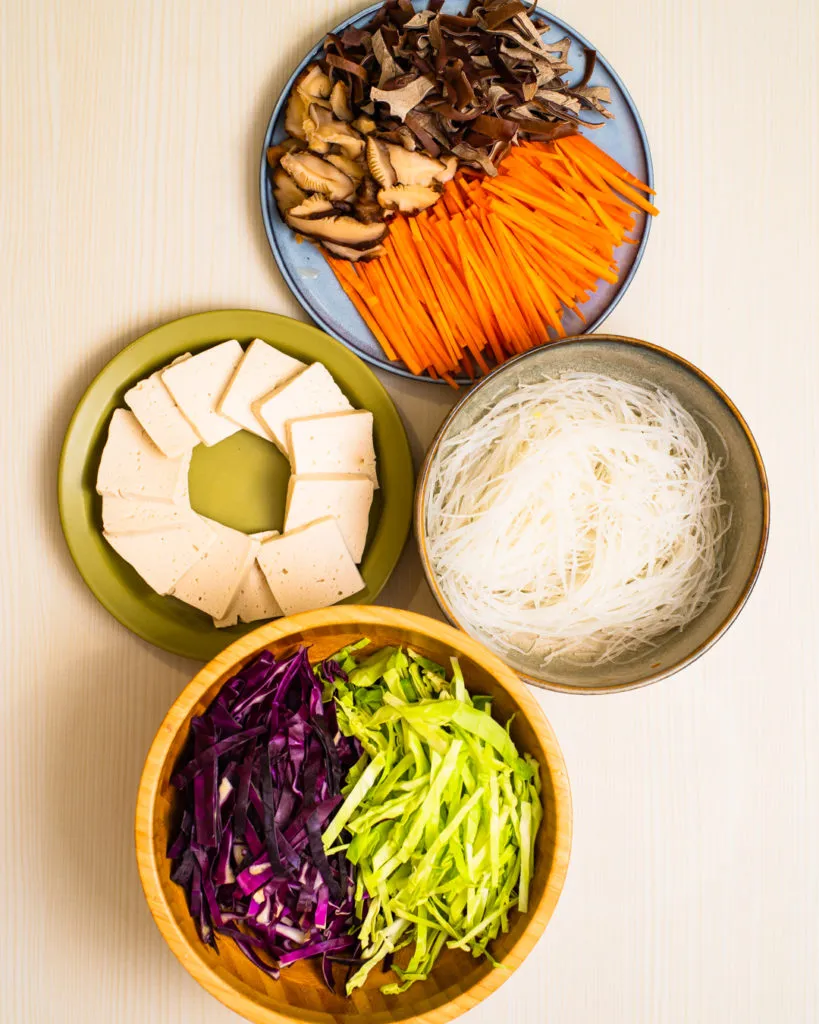
As the names suggest — cheun gyun (Hong Kong-style) and chả giò (Vietnamese-style) — spring rolls are filled with fresh, seasonal spring vegetables like carrots, cabbages, and other veggies.
Wood ear mushrooms appear in both types. For Hong Kong-style, shiitake mushrooms — a staple in Cantonese cooking — are also added. Other common fillings in cheun gyun include bean sprouts and bamboo shoots.
Here’s a major difference — herbs are key for chả giò. Like Vietnamese summer rolls (gỏi cuốn), fresh herbs such as Vietnamese basil, coriander, and mint are added to enrich the flavor and freshness. Meanwhile, the only herb in cheun gyun is chive sprouts, but it’s not essential and is sometimes omitted.
Fillings for cheun gyun are cooked before frying, while fillings for chả giò are raw. Both types traditionally include pork. For cheun gyun, the pork is sliced and cooked with veggies before wrapping; for chả giò, the pork is ground and mixed with other raw ingredients in a large bowl.
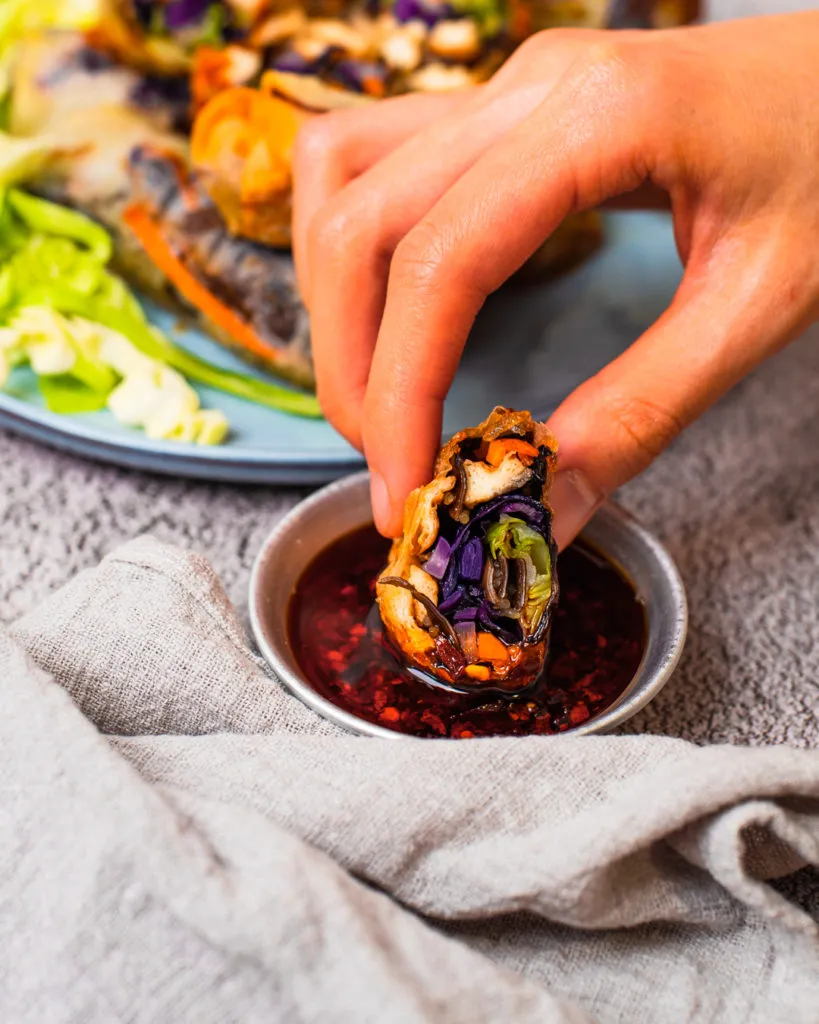
2. DIPPING SAUCE
“Do you want Worcestershire sauce (gip zap)?” When you order cheun gyun at a dim sum house, the lady always asks — and the answer is always “Yes, please!” Worcestershire sauce is a savory, slightly sweet, and tangy sauce that cuts through the richness of deep-fried food beautifully. Sadly, it’s neither gluten-free nor vegan, but don’t worry — a simple homemade version is included in this recipe.
Like all deep-fried goodies, people have their own preferences. Some love plain soy sauce, chili oil, vinegar, plum sauce, or even mayonnaise.
In Vietnam, chả giò is served with different sauces depending on the region: nước chắm (fish sauce with lime juice and chili), nước lèo (peanut sauce), or tương xào (similar to hoisin sauce). To emphasize freshness, many Vietnamese diners wrap the spring roll in a piece of fresh lettuce before dipping.
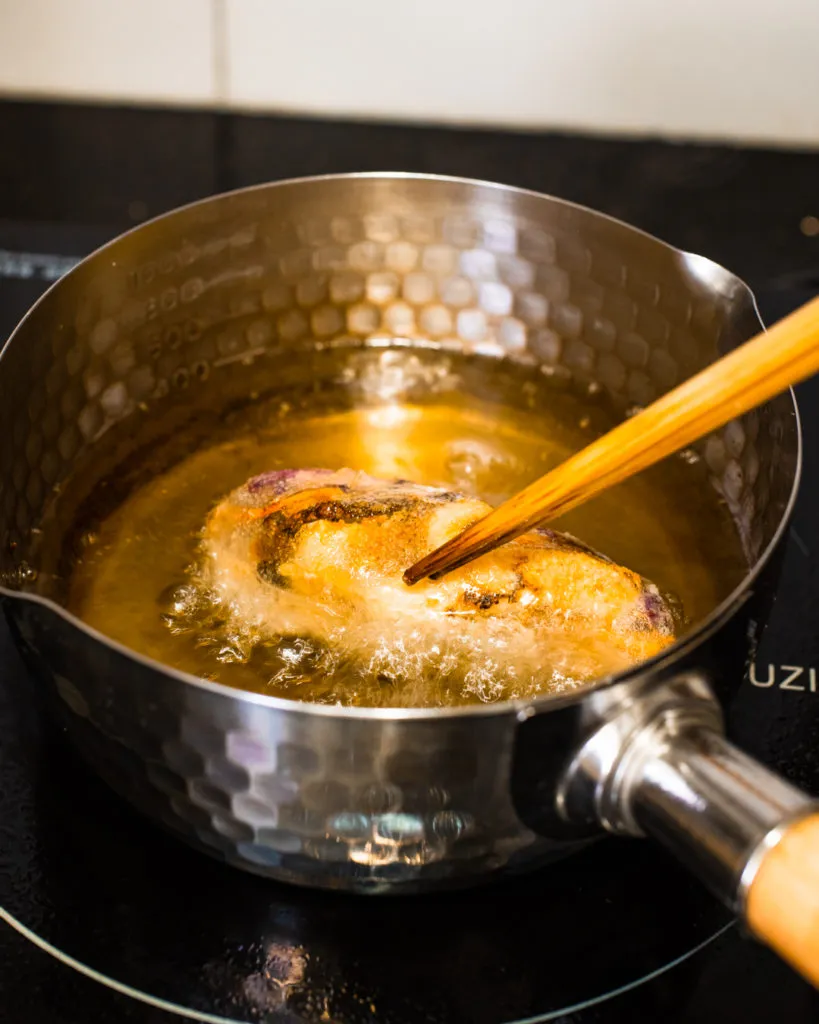
HOW TO FRY THE SPRING ROLLS
Choose an oil suitable for deep-frying with a smoke point higher than the cooking temperature, such as peanut oil, sunflower oil, or refined coconut oil.
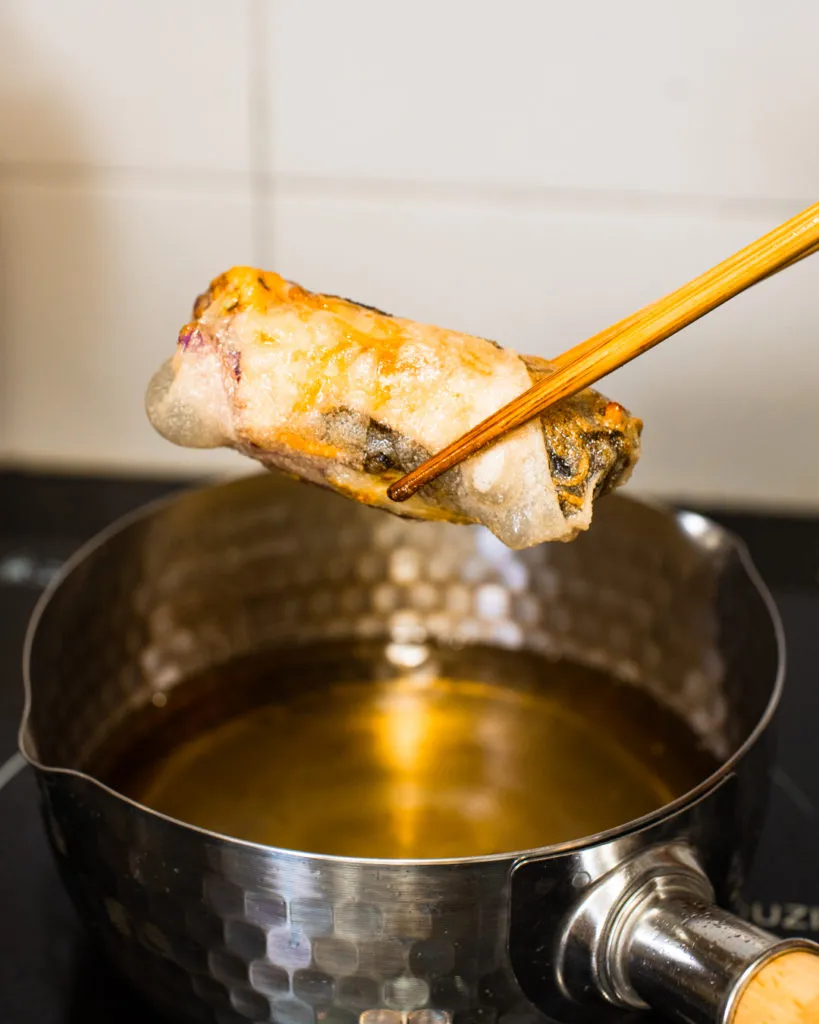
Make sure the spring rolls are sealed tightly so oil doesn’t seep into the filling during frying.
Fill a small pot with enough oil to fully cover the spring rolls. Heat over medium heat until it reaches 320°F (160°C). Try to maintain the temperature at 320°F throughout — too high a temperature will create large bubbles on the surface.
STORAGE
You can store uncooked spring rolls in an airtight container in the freezer overnight and fry them the next day.
If you have leftover fried spring rolls (how is that possible?), store them in an airtight container in the refrigerator for up to 24 hours. Refry them when ready, or bake in a preheated oven at 350°F (180°C) for 10 minutes.